What is a Diatonic Chord Progression
Chords
For background on what a chord is, see 20240904095922-Chords & 20240924121346-What_Chords_Are.
From “Diatonic Chord Progressions¨ in Music Theory for the Electronic Music Producer
[…], we need to look at something called the diatonic chord progression. Let’s start by picking apart those three words and dealing with them one-by-one.
- Diatonic: This is a word that means “in key.¨ If something is diatonic then it is locked into a key. The opposite of diatonic is chromatic - not in any key.
- Chord: We know what this means now - it means our triads. “Chord¨ could also mean groups of more than three notes, so it doesn’t always have to mean just a triad.
- Progression: A chord progression is the skeleton of any song: it is a sequence of chords that sound good together.
So if we put all three words together, what we have is diatonic chord progression: a sequence of chords that are all in the same key and sound good together.
Temporal Sequence
The describes sequence here is temporal. The chords follow each other in time, and in that way progress.
Background on Being “In Key¨
For more on what it means to be “in key,¨ see 20240903174948-Being_“In_Key” & 20240904103821-Musical_Scale_and_Key_Patterns .
Background on Chords
For background on chords, see 20240924121346-What_Chords_Are & 20240904095922-Chords.
In other words, a diatonic chord progression is a temporal sequence of groups of two or more unique musical notes / (mechanical) keys / pitches (conventionally, three unique musical notes / [mechanical] keys / pitches) each of which share the same scale and thereby sound good together (Allen 2018, 77).
Conventionally, there is a pattern that is used to select all chords that ”reside,¨ so to speak, in a given key and label them based on their role in a given diatonic chord progression. This pattern, called the diatonic chord progression pattern, is as follows (Allen 2018, 78):
From “The Pattern¨ in Music Theory for Electronic Music Producers
M - m - m - M - M - m - dim - M
To interpret this pattern, one needs to understand these abbreviations and acronyms (Ibid):
From “The Pattern¨ in Music Theory for Electronic Music Producers
Capital M means “major¨ and lowercase m means “minor¨.
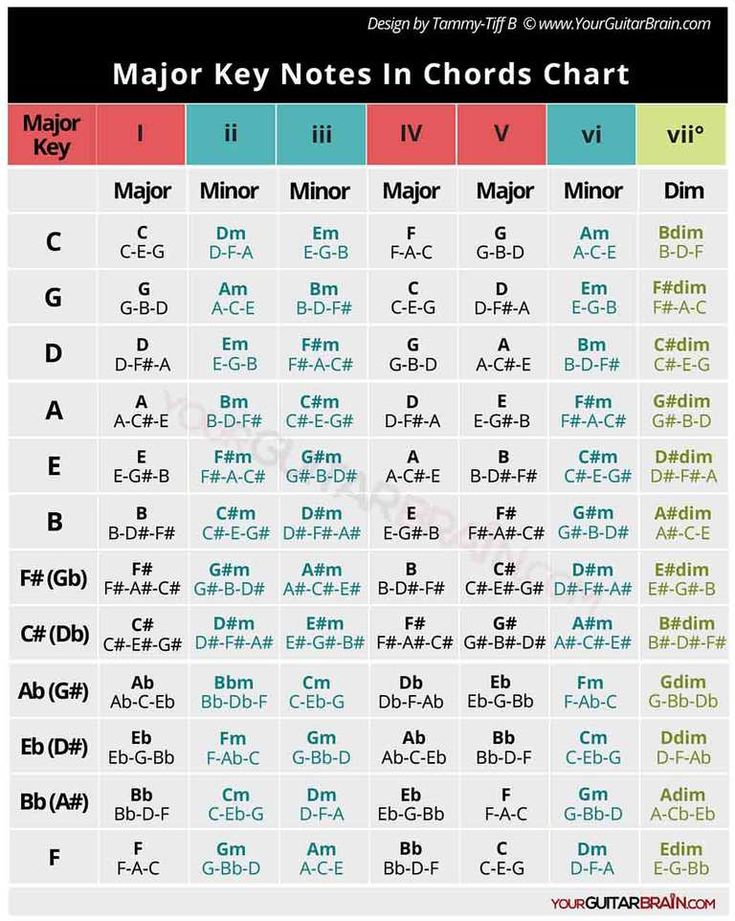
The sequence of the pattern correlates with the scale degrees of the given scale (Ibid):
From “The Pattern¨ in Music Theory for Electronic Music Producers
[. . ] what this is saying is our first chord in a key will be Major, because the first M is capital. Going back to C Major, that means that if we build a chord on the tonic (the first note in C major) - C - it will be a major chord. If we build a chord on the second note of that key, D, it will be minor because the second m in the sequence is lower-case.
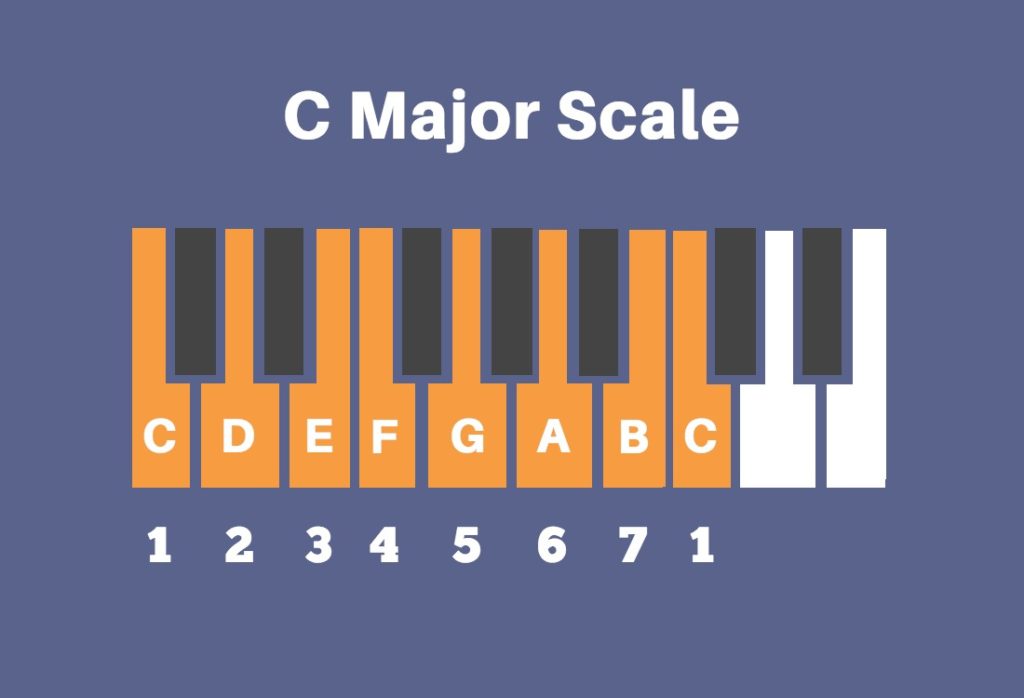
Scale Degree Labels
The scale degrees of C Major scale can be seen above. However, don’t forget that scale degrees also have labels (refer to 20240904145213-Supertonic_Scale_Degree, 20240904150953-Mediant_Scale_Degree, 20240904153312-Subdominant_Scale_Degree, 20240904154815-Dominant_Scale_Degree, 20240904161116-Submediant_Scale_Degree, & 20240904162744-Leading_Tone_Scale_Degree)
Question
Notice that the seventh scale degree, i.e. the leading tone, under the diatonic chord progression pattern would be neither Major nor minor. What is “dim¨ in the diatonic chord progression pattern?
temporality time chord_progression diatonic_chord_progression chords keys diatonic_chord_progression_pattern major_chord minor_chord diminished_chord musical_scale C_major_scale major_scale music music_theory musical_key chord_quality musical_key musical_chord
bibliography
- “Diatonic Chord Progressions.” In Music Theory for Electronic Music Producers: The Producer’s Guide to Harmony, Chord Progressions, and Song Structure in the MIDI Grid., 1st ed., 77. Minneapolis, MN: Slam Academy, 2018.
- “The Pattern.” In Music Theory for Electronic Music Producers: The Producer’s Guide to Harmony, Chord Progressions, and Song Structure in the MIDI Grid., 1st ed., 78. Minneapolis, MN: Slam Academy, 2018.