The Biofuel Refinery
From bib. source
[…], the liver is a vital organ and we can only live about 8 hours without it. It has many functions including carbohydrate metabolism, fat metabolism, cholesterol production, blood detoxification, bile production, digestion, and lactic acid clearance.
As mentioned above, the liver performs the following functions (LeMond 2015, 16):
- Carbohydrate metabolism
- Fat metabolism
- Bile production (i.e., bile anabolism)–import to fat digestion
- Lactic acid clearance (i.e., lactic acid catabolism)
Carbohydrate and fat metabolism in particular are what make the liver the center for management of biofuels, processing them so that they can be allocated and acting as the modulator for the use of bio-fuels for energy. That is, it is in charge of energy gatekeeping and modulating bio-fuel levels. For example (LeMond 2015, 17):
From bib. source
That is, the liver, provided the right signal (e.g., insulin) takes glucose and stores it as glycogen in its cells, i.e. in hepatocytes. That is, the liver can be triggered into storing carbohydrates, sugars, starches or grains as fat. Since this fat is stored in its cells first, the liver can be quite fatty. On the other hand, when engaging in exercise or exertion, which drops blood glucose levels, the pancreas releases glucagon as a signal for the liver to release “stored glycogen in the form of blood glucose” (Ibid).
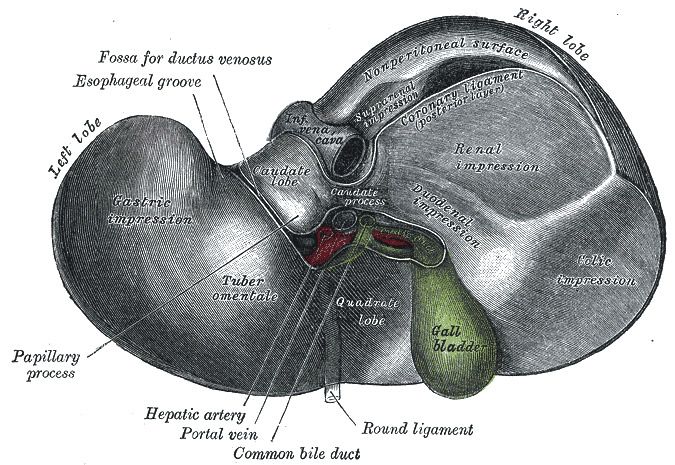
Through both of these processes the liver is involved in, the liver is modulating the level of a biofuel–namely fat–based on its activation by the blood sugar regulatory system. This seems clearly affected by the conditioned relationship between diet and exercise. The liver, in sum, functions almost like the body’s petrol station that also has the joint role of being the refinery for that petroleum. Consequently, maintaining a well-functioning blood sugar circulatory system is key to a healthy liver.
Glycogen is one type of fat
Glycogen is one type of fat, and is concentrated in the liver. It is a form of short-term or medium-term energy storage. Long-term energy storage is found in what we typically associate with body fat, namely fat stored in adipose tissue. Keep this in mind when consulting on digestion, including fat digestion.
The liver during oxygen deprivation
As is known, a biofuel, e.g. glucose, is only capable of producing energy if oxygen is also available to it. Hence, in more extreme conditions of exertion (i.e., conditions of low volumes of oxygen per unit time or per inhalation, or just low oxygenation / oxygen saturation ) the liver pivots to alternative ways of producing energy, one of those ways producing lactic acid as a by-product (Ibid):
From bib. source
With maximal or near-maximal exercise, the muscles go into anaerobic (low-oxygen) mode, which is less energy efficient and creates lactic acid. Unless eliminated by the kidneys or converted by the liver, lactic acid can build up in the blood stream and impair performance and in the extreme case cause lactic acidosis (acidification of the blood).
Lactic acid can be converted by the liver back into glucose in a process known as gluconeogenesis, but it “costs more net energy […] to perform this feat” (Ibid). Nonetheless, this is what “enables the athlete to recover” after strenuous exercise (Ibid). It is like a last ditch energy boost that is hopefully just enough for the athlete to engage in other activities that replenish biofuel or facilitate re-oxygenation. Consequently, for replenishing the following activities are important:
- Deliberately paced and controlled breathing patterns during and after exercise, to maximize the amount of time high amounts of oxygen spend in organ systems and minimize the amount of time high amounts of carbon dioxide spend in organ systems.
- Consuming a small amount of carbohydrates right after exercise, coupled with protein and vitamins (often found in meat) for rebuilding muscle (this pairs well with advise at Post-workout selective nutrition). Fatty or oily meats in particular may help regain liver fat.
Cori cycle
The liver under anaerobic conditions producing by-product–lactic acid–and a consequent need to reconvert that by-product–that lactic acid–back into glucose before it has damaging levels in the blood stream is called the Cori cycle (Ibid).
The liver under nutrient deprivation
From bib. source
In times of starvation, glycogen stores become depleted and the body must start turning body fat into fuel.
I.e., when the liver’s own fat stores are depleted, it starts to make use of body fat, i.e. adipose tissue fat (Ibid). This tends to happen in situations such as starvation or famine (Ibid). Theoretically, it could also happen in endurance training. The way the liver begins to make use of adipose tissue as a biofuel is it starts (Ibid):
From bib. source
[…] chopping the long chains that make fatty acids into shorter pieces called ketone bodies. […] Unlike long chain fatty acids, ketones can cross the blood brain barrier and supply the brain in times of starvation.
That is, long chain fatty acids are reduced into shorter pieces called ketone bodies that can cross the blood brain barrier to supply the brain with a more direct source of energy.
Given it leads to burning adipose tissue, a.k.a. body fat, during its duration, starvation will cause a drop in the body-fat-to-muscle-mass ratio, which many times means weight loss; however, the downside of this is that during starvation stress hormones that encourage post-starvation rebuilding of adipose tissue are also released (Ibid). So starvation is not recommended for fat loss. Instead, the best thing to do is to have a diet that sources its carbohydrates from whole grain foods with reasonable low-frequency portions of high protein foods that are also rich in fiber and contain some monounsaturated or omega-3 fats, while engaging in high-intensity interval training.
When the body consumes itself
If starvation lasts long enough, even the protein in the body’s own muscles are broken down into amino acid fuel, reducing muscle mass (Ibid). While we may be interested in weight loss, we are not interested in loss of muscle mass accounting for any portion of that weight loss.
biology hepatology physiology anatomy BEAST_fitness_system BRATS_fitness_system lactic_acid biofuel_metabolism nutrient nutrition meals blood_stream blood_flow semiotics biosemiotics cytology biochemistry physiology tophology hepatology body_fat blood_sugar_regulatory_system gas_station anaerobic_exercise anaerobic_exercises oxygen_saturation acidification lactic_acid Cori_cycle lactic_acids gluconeogenesis recovery adipose_tissue endurance_training ketone_bodies fatty_acid fatty_acids blood-brain_barrier tophology myology kinesiology organ_systems muscles system amino_acid amino_acids organ_system digestive_system
bibliography
- “The Human Machine.” In The Science of Fitness: Power, Performance, and Endurance, 9–38. Waltham, MA: Academic Press, 2015.