Radiance from Lighting
From “Lighting Fundamentals¨ in Light for Visual Artists
When light hits a surface it either bounces or is absorbed by it, depending on the colour[sic] of the surface. A white object will reflect all wavelengths equally, whereas a black object will absorb them all. When white light hits a red surface the blue and green wavelengths are absorbed and the red light is reflected.
That is to say, the color of a surface is determined by what light its pigmentation reflects or absorbs. Whereas a white object reflects all wavelengths, i.e. has all colors, of light equally or proportionally, when it hits a surface, depending on that surface’s pigment, it may reflect one, or some balance, of colors, resulting in a color other than white.
Pigments as color filters for ambient and directional light
One way to think about this is to treat the pigment of a surface as a a reflective color filter for light. In behaving like a color filter, this means that it determines the color output for any given color input. Any image or art should then start with establishing the color of imagined ambient or directional light and the allowable imagined pigment range of objects in the scene. Then, the actual pigments used to create the image or art piece by the artist is determined by the interaction of these two things together.
However, the resulting color of objects also implies bounced light (due to the color depending on the reflection of light) that itself is subject to filtering again by that same pigmentation of surrounding surfaces (Yot 2020, 13):
From “Lighting Fundamentals¨ in Light for Visual Artists
So, if white light hits a red surface the photons reflected by the surface will be red. When these photons hit the next surface in their path they will therefore illuminate it with red light. This phenomenon is known as radiance, and causes the colours[sic] of adjacent objects to have an effect on each other.
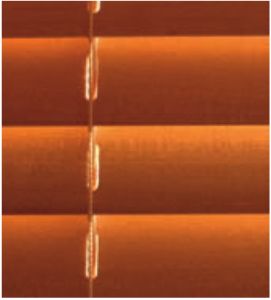
This means also that the ambient light of a room, while typically involving a predominant color cast contingent on the behavior of atmospheric gases at the molecular and atomic level, involves areas of blends or mixtures among the colors of bounced light within a scene that act as localized ambient light. This is known as radiance (Ibid):
From “Lighting Fundamentals¨ in Light for Visual Artists
Radiance is usually a subtle effect, and it takes a great deal of light for it to become apparent. In soft or dim light it may not be visible at all, but in bright light it can add a lot of colour[sic] to the surfaces it affects. Light reflecting between objects of the same colour[sic] can create a very saturated effect–the bounced light reinforces the existing colour[sic] of the underlying surface, making it glow vividly.
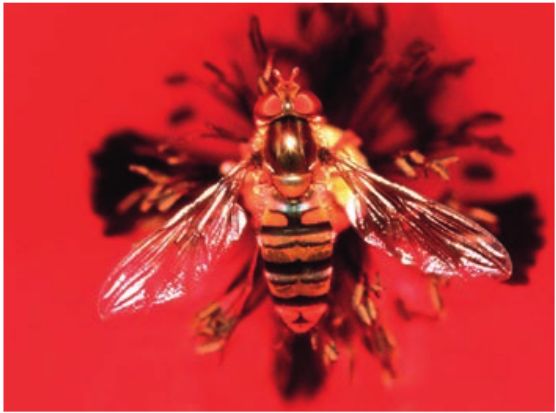
Radiance as mediator between saturation, brightness and vividness for hues
Radiance is related to saturation which is related to vividness of an image, as the intensity or brightness of a given color can be reinforced when illuminated by radiance of the same color.
electromagnetic_radiation electro-magnetic_radiation visual_art spectroscopy electromagnetic_spectrum electro-magnetic_spectrum tonal_value tonal_values optics cast_light directional_light ambient_light color_cast atmosphere gas molecule atom blend mixture visibility color_theory bounced_light reflected_light reflection
bibliography
- “Lighting Fundamentals.” In Light for Visual Artists: Understanding and Using Light in Art & Design, 2nd ed., 9–116. London, UK: Laurence King Publishing, 2020.