Role of Artificial Lighting
From bib. source
Light indoors has a very different character from that found outside, the biggest difference being that falloff is a significant factor indoors. Falloff affects all man-made lights and light coming from windows, but in sunlight […] it is not noticeable because the sun is so far away. When human beings are in control of the light source there is an added twist in that the light is often designed for a specific purpose.
What is “falloff¨?
It is not clear what is meant by “falloff¨ here, but my best guess based on common context clues for the use of the word, is that “falloff¨ refers to a gradient from light to shadow, typically along a given dimension. These notes will interpret the quote above with this taken as a given.
Indoor v. outdoor ambient light
Falloff is something that affects indoors, or more generally, something that affects enclosed spaces that are relatively small and contain their own light sources (Yot 2020, 40). This is because suns, while producing very intense light, are distant from the Earth and have their light diffused or filtered by the atmosphere or atmospheric gas of the given planet (see 20250220145026-Ambient_Light_in_Visual_Art), such that falloff effects are not as stark. So when the sun is blocked out by enclosure, the role of other light sources become more prominent and relevant to the way light looks and behaves for that environment; it also means the light from such enclosed sources do not have the effects of atmospheric gases compound on them to the same extent as they travel shorter distances within that enclosure.
So, ambient light can be divided into:
| name | light environment | relative distance of light source | amount of light sources per space | paradigmatic light sources | light source size |
|---|---|---|---|---|---|
| indoor light | enclosed space, usually artificially so | close | potentially high | local, exothermic reactions–usually artificially produced, such as in light bulbs, fireplaces, candles, etc. | big |
| outdoor light | open, exposed surface, usually naturally so | far | low | global dense, celestial bodies with high exothermic activity at their high-gravity core | small |
Further, the direction of light in enclosed spaces, if such spaces are made by an organism such as a human, may be seen to have more intention involved (Ibid). This intention can then be used to explain the light and light sources of indoor light. This is unlike lights from natural sources.
So, light can also be divided between:
| name | explanatory factor | paradigmatic light sources |
|---|---|---|
| artificial light | contingent organismic activity or subjective intention | usually technology, such as light bulbs, light pollution |
| natural light | unintentional, non-subjective inherent properties and laws of objects | forest fires, lava |
A paradigmatic example of a light source that lies at the blurry bolder between artificial and natural light, as well as indoor and outdoor light, is the window. Window light connects the indoor with the outdoor, and in doing so provides access to sunlight and some skylight for the indoors. For the purpose of indoor lighting, “the window itself is the effective light source¨ (Yot 2020, 41). But because a window is bordered, and exists at a specific location, it focuses whatever characteristic light is in its immediate surroundings into the indoors (Ibid):
From bib. source
Direct sunlight can get in through windows but, […] much of a home will never receive sunlight that hasn’t been reflected by one surface or another.
That is, the window light, being focused, only truly brightens a specific area, and would only seem to provide light to the rest of the indoors through the way the walls and other indoor items reflect that sunlight (see 20250221095615-Radiance_from_Lighting & 20250220121125-Correlations_Between_Light_and_Shadow_in_Visual_Art) (Ibid).
Window lighting
The impact of windows on indoor light seems to be the following (Yot 2020, 41):
From bib. source
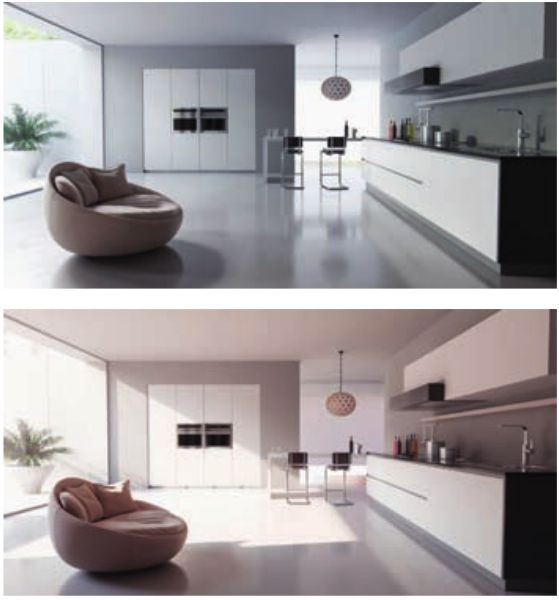
If there is only one window then contrast is relatively high, despite the soft light source. With multiple windows contrast is lower as there will be more fill light.
That is, window light retains some softness, but still is high-contrast as it is focal and bordered–only reflections act against this tendency, or increasing the number of windows (Ibid). Meanwhile, the “weather will affect the light coming through the window¨ in its color, just as the reflective surfaces indoors will (Ibid).
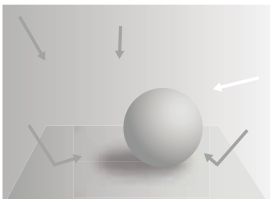
The cardinal direction that a window faces also affects the extent to which direct sunlight, rather than mere skylight, contributes to the light coming through the window, also affecting glare or contrast (Ibid). North-facing windows on Earth always face away from the sun, and so only take in diffused skylight (Ibid).
Generalizing the window scenario
Perhaps we could apply the above behavior of window light to any bound, transparent surface dividing an indoor versus outdoor, such that the outdoors has skylight or sunlight. Not just windows.
Stand-alone indoor lighting
Another artificial source of light are lamps or light bulbs with lampshades on them. Lampshades tend to be the main source of light in a room as, in diffusing the light of the lamp or light bulb, they also allow the light to spread out to a wider area (Yot 2020, 42):
From bib. source
[…] – this is the purpose of the lampshade – in order to soften the light and the shadows it produces.
The trade-off is that the same intensity of light further spread out may be dimmer–save for the effect of some gas affecting the exact way different wavelengths spread out, leading to color differentials between closer and further light from the given light source (see 20250220145026-Ambient_Light_in_Visual_Art). Consequently light through a lampshade is lower contrast than light without a lampshade. In contrast to lampshade lights (no pun intended), individual spotlights “produce hard lighting,¨ though this can be only partially countered by implementing several spotlights “which together will soften one another’s shadows yet still create a multitude of highlights¨ or combining them with other lighting (Ibid).
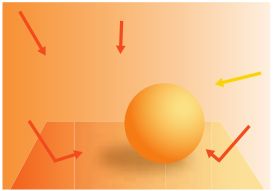
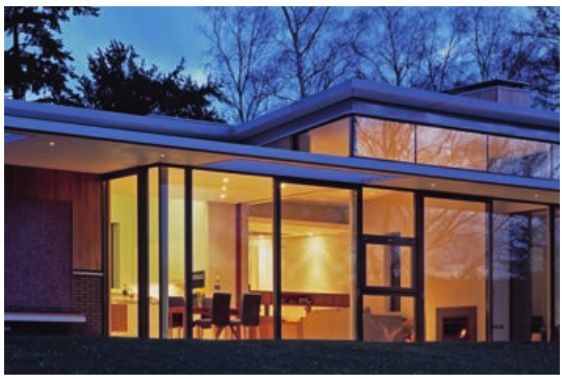
As “[t]ungsten has historically been the most common form of indoor lighting,¨ it is important to remember that “the colour of tungsten lighting is a strong yellow/orange¨ but also that “our brains have the capacity to filter out the orange colour¨ and thereby “perceive it as white¨ (refer to 20250221111946-White_Balance) (Ibid).
Tungsten lighting is orange/yellow due to incandescence
The color of tungsten lighting is due to the fact that tungsten light is incandescent light–light produced through the application of heat to a filament.
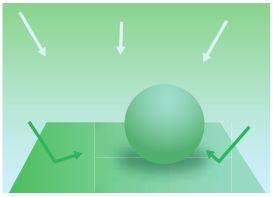
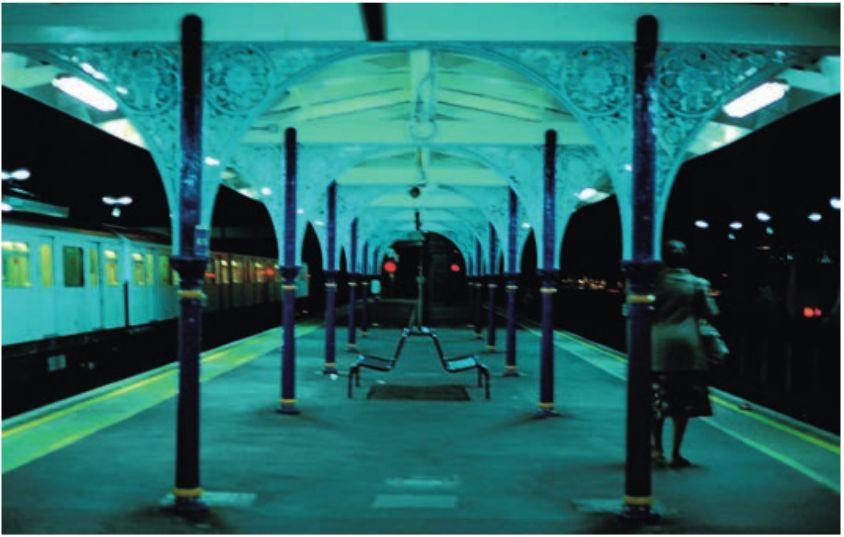
Fluorescent light is “primarily used in situations where cost is a factor¨ such as commercial interiors or corporate work spaces, and its “color temperature is usually greenish¨ (but take white balance into account) (Yot 2020, 45). “The density of lights will dictate the brightness of the lighting,¨ and fluorescent lights are often “used to light relatively large areas with many individual lights¨ so that often their use is accompanied by “complex overlapping shadows and multiple rectangular highlights¨ (Ibid).
LED lights
Perhaps when the book being sourced here was written, LED (light-emitting diode) lighting wasn’t as common, but LED lighting can come in a variety of colors, though standard LED houselights will tend to be white light (even before white balance is taken into account).
Other sources of indoor lighting are:
- Electric / electronic household appliances (Yot 2020, 43)
- Spill-over light from adjacent spaces (Yot 2020, 43)
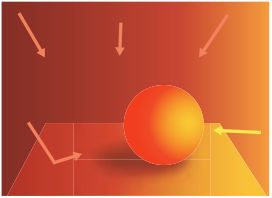
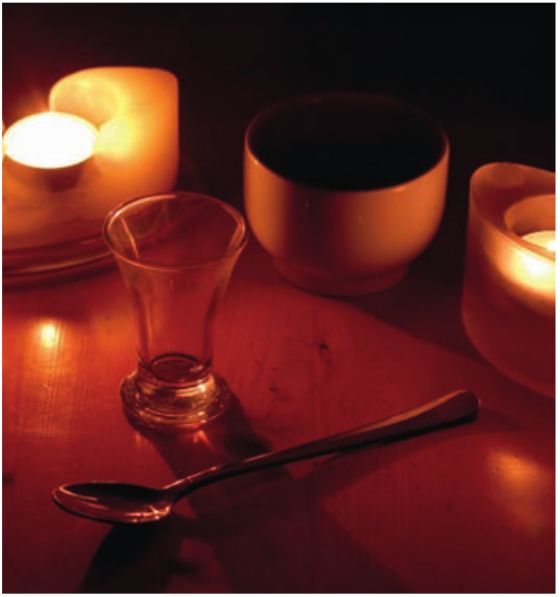
- Fire–fire can be particularly interesting, as fire is often either at ground- or table- level indoors, and also flickers such that the light and shadow from this source is highly dynamic–the light is also redder than from incandescent light bulbs and is affected less by the white balance effect due to too low of a color temperature (Yot 2020, 48)
artificial_lighting lampshade_lighting window_lighting tungsten_lighting fluorescent_lighting incandescent_lighting light_source indoor_light indoor_lighting lampshade_light fluorescent_light incandescent_light window_light outdoor_lighting outdoor_light ambient_light atmospheric_gas atmospheric_gases exothermic_reaction exothermy organism essence nature inherence subjectivity fill_light light_bulb dim_lighting dim_light wavelength candlelight candle_light candle_lighting color_temperature spill-over_light cardinal_direction
bibliography
- “Indoor and Artificial Lighting.” In Light for Visual Artists: Understanding and Using Light in Art & Design, 2nd ed., 40–51. London, UK: Laurence King Publishing, 2020.