Variability in Daylight
There are many factors that can influence the behavior of sunlight / daylight, that thereby affect color (refer to 20250220145026-Ambient_Light_in_Visual_Art), then affecting pigment (refer to 20250220121125-Correlations_Between_Light_and_Shadow_in_Visual_Art & 20250221095615-Radiance_from_Lighting). Many of the main ones relate to atmospheric conditions. For example, clouds (Yot 2020, 25):
From bib. source
Clouds also have a major impact on both the colour and the character of sunlight. Clouds are translucent, which means they let light pass through them, but in a diffuse manner. When light travels through a transparent surface, such as glass, the rays remain parallel; where a surface is translucent, the light that travels through it is diffused by the substance and the rays bounce around inside it, emerging from it in several directions. This is a similar phenomenon to the scattering of blue light by the atmosphere, except that in clouds it occurs across all wavelengths of light, not just the shorter ones. The effect that this diffusion has on sunlight is to soften it, turning a small hard light source (the sun) into a large, soft one (the whole sky).
In other words, clouds are similar in function to atmospheric gas in that they allow light rays to bounce around in many different directions (i.e., allows the diffusion of light) based on their density and their relatively low levels of pigmentation. However, clouds differ from atmospheric gas insofar as the latter works far more as a filter for different electromagnetic wavelengths (i.e., for colors of light) (refer to 20250220145026-Ambient_Light_in_Visual_Art), biasing or skewing the light it reflects towards a certain color. Clouds are more neutral in this respect–they tend to be white to grey / gray, with lessened or amplified contrast for themselves based on how thin or thick the cloud is.
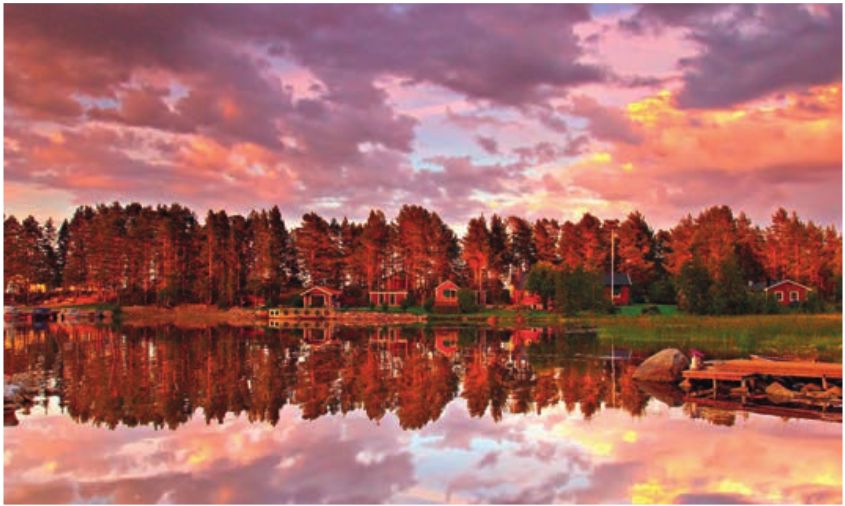
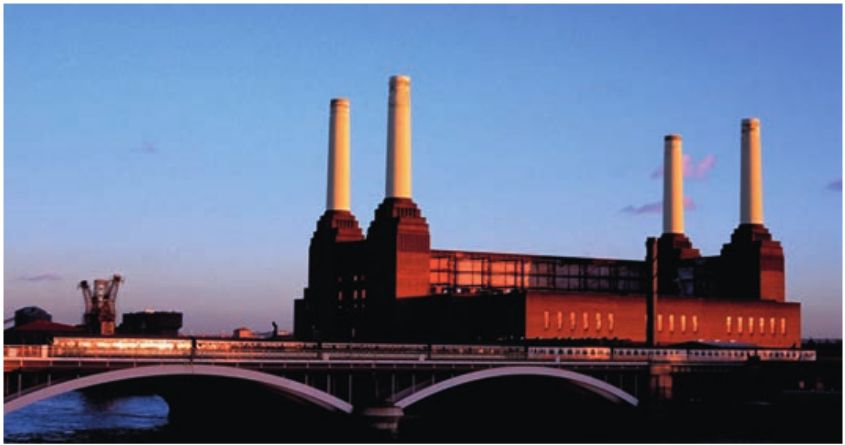
Nonetheless, clouds can affect the surrounding light by softening its edges and increasing the gradient between light and shadow, as well as by blocking available sunlight that would contribute to radiance and visibility in the daytime (refer to 20250221095615-Radiance_from_Lighting). A cloud can affect the perceived transition from day to night. Dust and pollutants, or fog or vapor, can cause haze, all of which can make the visibility of far away objects fainter, lower their contrast, and produce a tint determined in large part by the way atmospheric gas, as aforementioned, interacts with sunlight (Yot 2020, 36).
Temperature and visual effect of gases
The temperature of a gas can also affect the way light behaves as it reaches the human eye. Very hot water vapor can have such radical undulations that it affects the direction of the light in a consistent manner, distorting the image of far-away objects.
Broken clouds in particular can increase the contrast of the scene, allowing for starker or more intense differences between shadow and light, allowing for dark patches upon the surface of the Earth and vibrant breaks in sunlight and consequent spillover radiance for surrounding nearby surfaces otherwise under shadow (Yot 2020, 33). This sort of light effect–high-contrast light with potential radiance–is known as dappled light (Ibid). Covers with spotty patches of transparency or holes, e.g. tree cover, can produce dappled light (Ibid). Dappled light leads to greater color variation in a given scene.

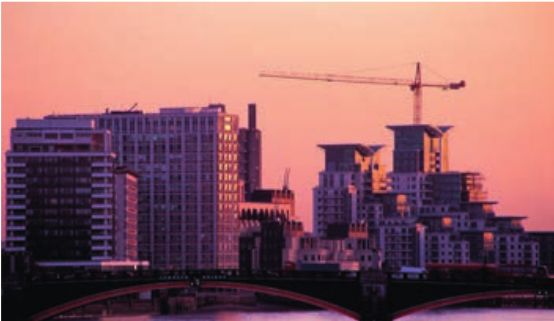
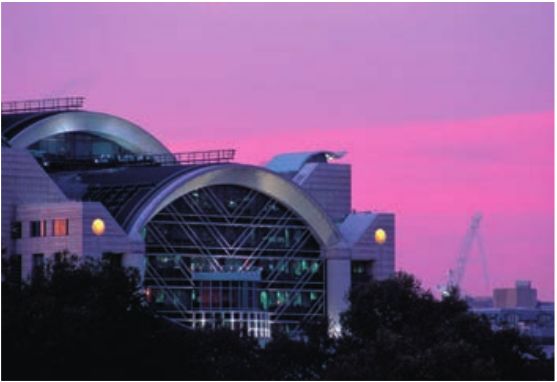
During nighttime, celestial objects aside from the sun may nonetheless–if not provide some light themselves–reflect light from the sun, providing the Earth with some fill light (refer to 20250220121125-Correlations_Between_Light_and_Shadow_in_Visual_Art). For example, in the case of Earth the moon can provide bounce light called moonlight (Yot 2020, 34):
From bib. source
Moonlight is reflected sunlight and obeys the same rules as sunlight. When the moon is near the horizon it has a red or yellow colour, but as it gets higher in the sky it becomes whiter. The surface of the moon is almost colourless, […]. The main difference is that moonlight is obviously much fainter, so the ratio between the hard moonlight and the soft skylight will be different than in daylight. Another thing you should be aware of is that the moon is quite small when viewed with the naked eye, […]. Our eyes have very little colour sense in the dark so our perception of night is colourless.
Another factor to especially consider at nighttime in planetary civilizations–especially technologically-advanced planetary civilizations–is light pollution, which is the light emitted by fuel usage or power sources in urban centers that end up “glowing in the sky somewhere, or reflecting back down off clouds with an orange glow” (Yot 2020, 35).
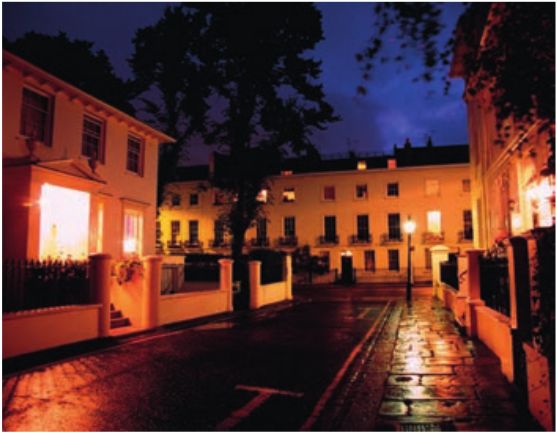
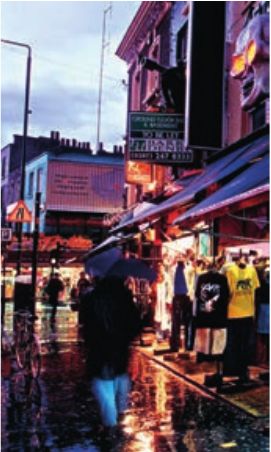
Finally, water or oil upon a surface can enhance the highlights perceived to be on that surface due to its reflectivity (Yot 2020, 37).
dappled_light fill_light reflected_light reflection reflectivity reflections bounced_light light_pollution pollution power_source power_sources civilization pollutant dust oils highlight
bibliography
- “Lighting Fundamentals.” In Light for Visual Artists: Understanding and Using Light in Art & Design, 2nd ed., 9–116. London, UK: Laurence King Publishing, 2020.