Managing Supply and Quality of Arterial Packets
From bib. source
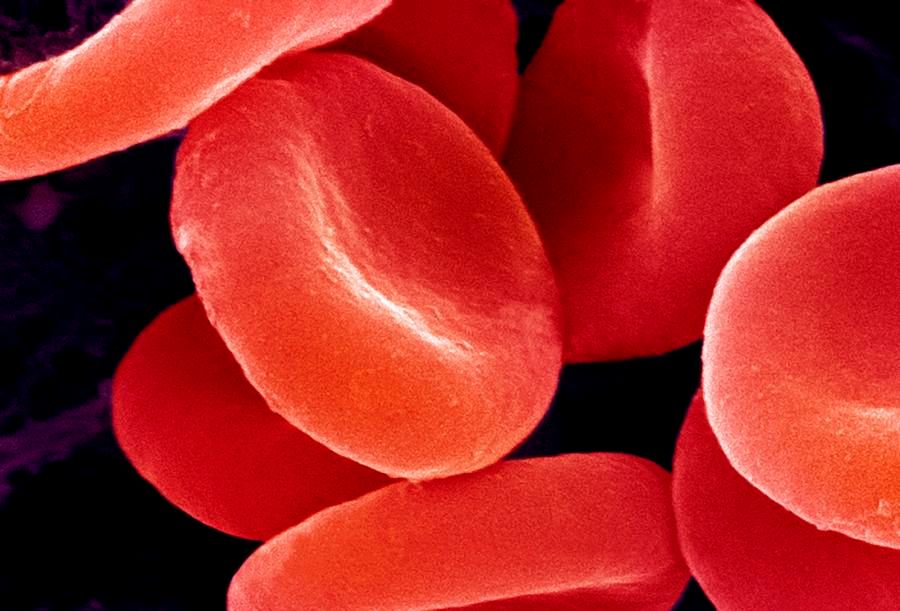
As red blood cells develop they fill with hemoglobin, the molecule that carries oxygen. Hemoglobin synthesis and RBC production is a complicated multi-step process that requires many essential nutrients including: iron, vitamins B5, B6, B9, B12, vitamin C, vitamin F, magnesium, and zinc.
That is, red blood cells (RBCs), which “transport the oxygen to our muscles and organs and remove carbon dioxide” through “hemoglobin molecules packed in” them, require, due to the hemoglobin they make use of, nutrients such as vitamins (namely B5, B6, B9, B12, C and F), and metals (namely iron, magnesium, and zinc) (LeMond 2015, 22). This is partially due to hemoglobin being comprised of an iron component known as heme that is synthesized entirely inside mitochondria, as well as a protein component known as globin (Ibid). That said, it is important to note that the amount of this synthesis that results in actual RBCs/erythrocytes is constrained by the availability of stem cells (Ibid):
From bib. source
Red blood cells come from the stem cells in your bone marrow and begin with nuclei and mitochondria like other cells.
The mitochondrial tie-in
As you can see, the mitochondria found in cells is a connecting node for all of these distinct bodily processes that make it important for shifting the target of efforts at homeostasis by the body or organ systems.
Increase in mitochondria raises ceiling of erythrocyte output, as constrained by bone marrow
The amount of available bone marrow stem cells constrain the production of erythrocytes. That is, it is the maximum ceiling the mitochondria can raise erythrocyte production to.
The degree of “redness of arterial blood” can tell us the oxygen saturation of the RBCs/erythrocytes in the blood, as that redness is caused by “oxygen binding the iron in hemoglobin” (Ibid). A deficit in hemoglobin in the RBCs/erythrocytes in the blood stream is known as anemia (Ibid):
From bib. source
Anemia is when there is not enough hemoglobin and RBC’s in the blood.
The degree of hemoglobin present in the blood stream “can be measured by sampling the blood for hemoglobin and hematocrit,” the latter–hematocrit–being the percentage the red blood cells make up of the blood (Ibid).
Luckily, such deficits can be easily addressed by consumption and absorption of a daily multivatmin so long as heavy metals like lead do not subsequently interfere with their absorption by disrupting “a key step in heme synthesis” (Ibid).
Dietary changes to address anemia
Since the task of RBCS/erythrocytes is to act as a packet of reactant (and, to a lesser extent, fuel), at full maturity they shed their nucleus and their mitochondria (LeMond 2015, 23). The lack of a nucleus “allows more room for hemoglobin,” which carries the oxygen reactant (Ibid). Given the lack of mitochondria, red blood cells rely instead on anaerobic (low-oxygen) glycolysis (which are less energy-efficient) (Ibid).
Absence of erythrocyte mitochondria reduces redundant energy use
Mitochondria in RBCs/erythrocytes can be seen as leading to redundant energy expenditure, as RBCs/erythrocytes are mainly carried by mechanical forces aided by muscle and vascular dilation. To the extent that there is some marginal mobility benefit, the amount of energy produced by mitochondria just to gain this benefit would be wasteful, and so less efficient anaerobic glycolysis is used instead. Outsourcing their movement to the heart and muscles allows RBCs/erythrocytes to optimize the amount of reactants (and to a lesser extent, fuel) they can supply to organs and organ systems–or, more generally, other cells.
Another factor in RBC/erythrocyte production, i.e. in erythropoiesis, is increases in the presence of a hormone called erythropoietin that emanates from the kidney. Increases in erythropoietin by the kidney can be triggered by atmospheres or gases with low oxygen density, which then leads to increases in hematocrit (Ibid).
Optimizing oxygen supply
In addition to increasing pulmonary efficiency by strengthen diaphragmatic and rib cage muscles, it is helpful to increase reactant (oxygen) distribution or allow for quicker absorption and access to inhaled oxygen by maintaining a goldilocks zone of hemoglobin-functional RBCs/erythrocytes. This can be done by occasionally exposing oneself to high altitude or high elevation environments for extended periods, in addition to eating protein containing specific light metals like magnesium, zine and iron. Breathing exercises that arbitrarily increase breathing speed independent of exertion, if done in frequent short doses, can also stimulate RBC/erythrocyte production.
biology cytology biochemistry cytophysiology physiology hematology red_blood_cell RBC hematocyte erythrocytology hematocytology erythrocyte carbon_dioxide tophology nutrition arterial_blood blood_stream biological_economics multivitamins vitamin metal heme_iron hematocrit stem_cell stem_cells bone_marrow skeletal_system musculoskeletal_system circulatory_system vascular_science cardiovascular_system hematopoietic_stem_cell hematopoietic_stem_cells heavy_metal heavy_metals glycolysis vascular_dilation marginalism marginality marginalist_economics endocrinology
bibliography
- “The Human Machine.” In The Science of Fitness: Power, Performance, and Endurance, 9–38. Waltham, MA: Academic Press, 2015.