Staves as Pitches and Durations in Time
From bib. source
Our system of musical notation is similar to a graph in which time is indicated on the axis and pitch is shown on the axis.
A staff [sic] is used in music to indicate the precise pitch desired. A staff consists of five lines and four spaces, but it may be extended indefinitely through the use of ledger lines.
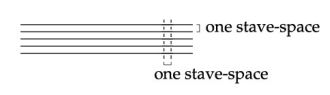
The spaces are of course each treated as a unit called a “stave space” and are equal in size, while each line in a standard stave is known as a “stave line” (Kostka, Payne, and Almén 2018, 2):
Horizontal lines that extend beyond the standard five-line stave are of course called ledger lines. The clef on a stave (Ibid):20250119131204-Staves
Staves
From “Ground Rules¨ in Behind Bars
The size of every notational symbol is measured in proportion to the stave size. A stave-space is the distance between two stave-lines and is used as a measurement for notational symbols and spacing.
Staves can have any number of lines, but the most common conventional ones are the five-line and single-line staves. For the stave, lines run horizontally, and have equal vertical spacing among them.
Single-line staves are used (Gould 2011, 5):
- To notate instruments of indefinite pitch
- To notate sounds of indefinite pitch (e.g., percussive sounds) produced on pitched instruments
- To notate vocal sounds of non-specific pitch
- To notate a cue line of rhythm
- As an option to show approximate pitch
Staves and the musical alphabet
Stave-spaces and stave-lines together vertically represent some segment of the looping sequence of the musical alphabet.
five-line_staves five-line_stave single-line_stave single-line_staff stave_lines stave_line stave-line stave_space music_theory musical_notation stave staves staff loop musical_notation musical_note musical_notes music_theory
bibliography
Link to original
- “Ground Rules.” In Behind Bars: The Definitive Guide to Music Notation, 3–45. London, UK: Faber Music, 2011.
From bib. source
[…] must appear at the beginning of the staff in order to indicate which pitches are to be associated with which lines and spaces.
There are a variety of clefs that determine different pitches for different lines.
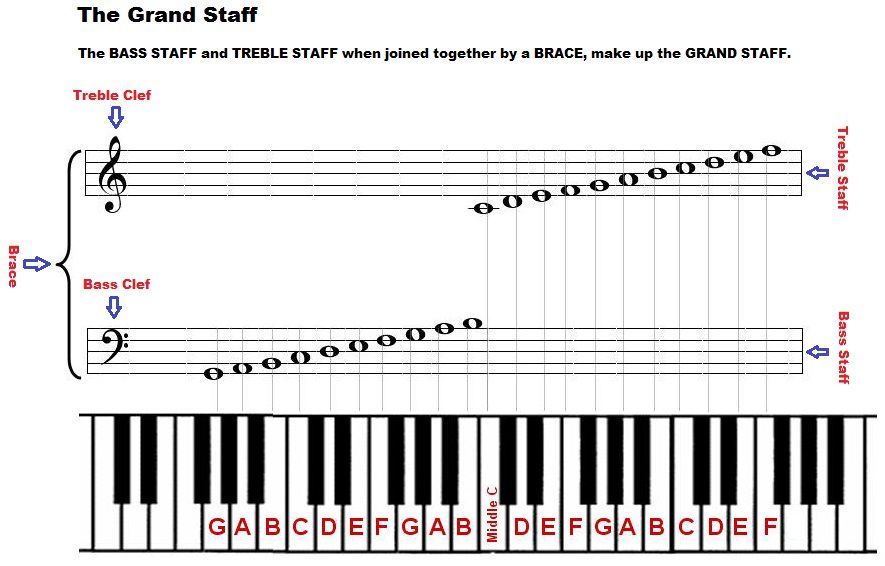
A grand staff is:
From bib. source
[…] a combination of two staves joined by a brace, with the top and bottom staves using treble and bass clefs using treble and bass clefs, respectively.
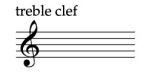
A treble clef is the following:
While a bass clef is as follows:Treble Clef
This clef looks like a ladle, whose top end curves like a snake back across the ladle handle, and then winds downward and back up crossing the ladle handle twice.
This winding portion is placed “around the G line¨ (Gould 2011, 6):
Which is to say, that the winding portion of the treble clef determines the note value of the horizontal stave-line it is on to be G natural (refer to musical accidentals). This is why it is also called the G clef (Ibid).
Open: Pasted image 20250425173947.png
Link to original
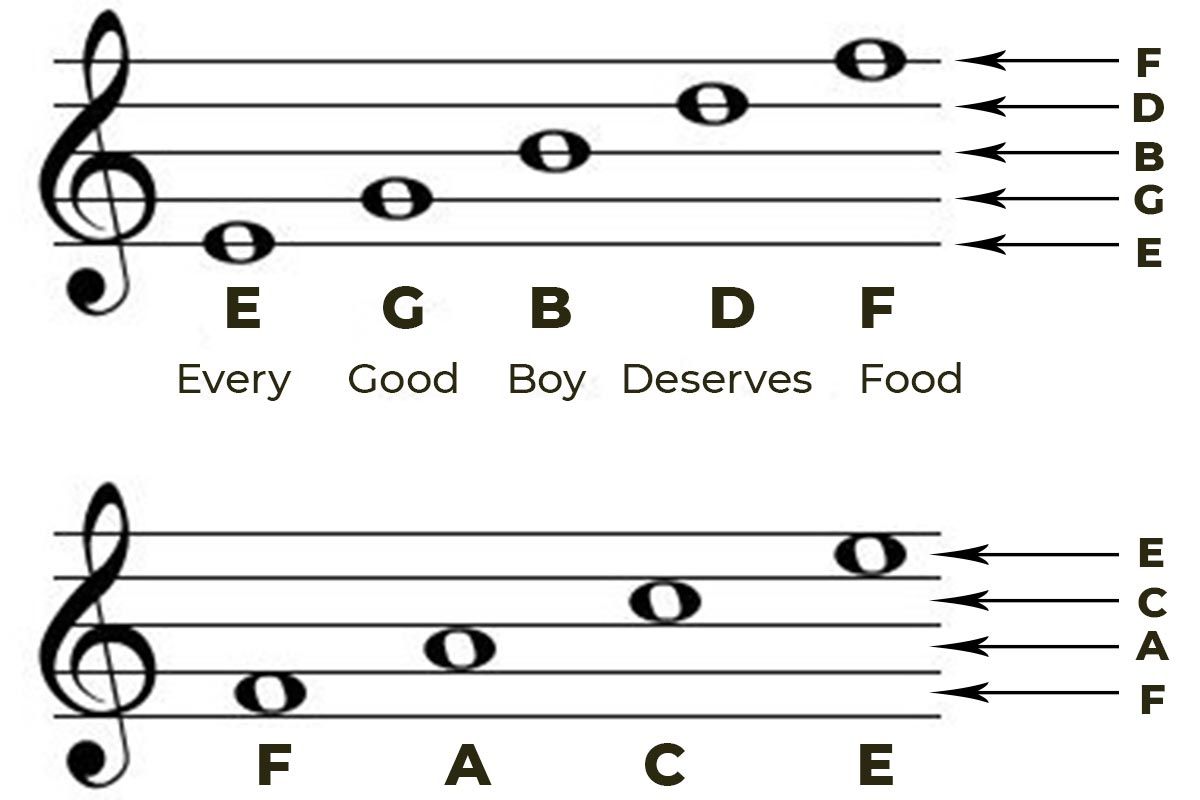
Consequently, the grand staff may look something like the below:Circular transclusion detected: Research/annotations/20250119133124-Clefs
ledger_lines stave_space stave_line stave_lines stave-lines stave-line stave-space stave-spaces grand_staff grand_stave treble_clef treble bass_clef bass
bibliography
- “Fundamentals.” In Tonal Harmony: With an Introduction to Post-Tonal Music, 8th ed., 1–65. New York: McGrawHill Education, 2018.